History

The History of Conkers: How a Children's Game Became a British Tradition
A horse chestnut in autumn is a small, brown, oddly polished thing, and for generations of British children it has been currency, ammunition and trophy all at once. The game is simple enough to explain in a sentence, yet nobody can say exactly when the first conker was swung. What follows is the story of how a tree from the Balkans ended up at the centre of a schoolyard ritual, and how that ritual became a national tradition with a world championship attached.
A Tree That Is Not as British as It Looks
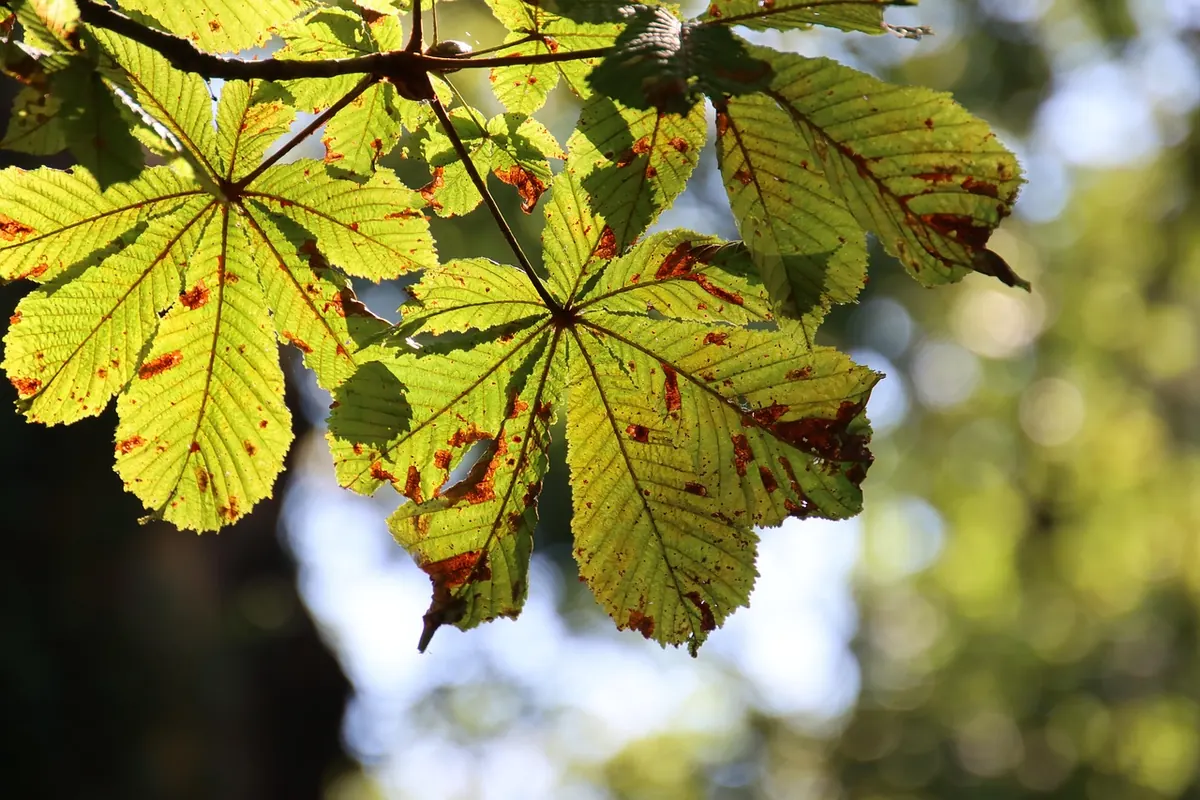
Ask someone to name a British tree and you will usually hear oak, ash or beech. The horse chestnut is a newcomer by comparison. It reached these islands in the late sixteenth century, most likely carried west along trade routes from the Balkans and Turkey, where it still grows wild in mountain woodland. For a long time it was planted purely for looks: avenues in parks, a broad canopy for shade, and those upright white flower spikes that earned it the nickname "candle tree".
Its seeds had no obvious use. Conkers are not edible, and eating them can make people and animals unwell, which is one reason livestock leave them lying. So for two centuries the tree's most valuable crop was something nobody had planned for: a hard, round, remarkably uniform object that appeared on the ground every October, free, in enormous quantities.
Before Conkers, There Were Snails
The word "conker" is older than the game most of us know. In the nineteenth century, and quite possibly earlier, children played a game using snail shells threaded onto string, knocking one shell against another until one cracked. The name is generally traced back to "conch", or to "conqueror" — the shell that survived had conquered its rivals. When horse chestnuts became commonplace in hedgerows, parks and school grounds, they were an obvious upgrade: tougher, more consistent in size, and available by the pocketful. The old name simply migrated to the new ammunition.
The earliest written trace
The first recorded game of conkers as we would recognise it is often placed on the Isle of Wight in 1848, and by the end of the Victorian era the game was firmly established in school playgrounds across the country. Beyond that early mention the paper trail thins out, largely because nobody thought to write down the rules of a game played by children with a piece of string.
How the Playground Wrote Its Own Rulebook
Conkers spread without a governing body, which is another way of saying that every town, and often every school, had its own interpretation. The core is always the same: each player has a conker on a string, players take turns to strike, and the first conker to be smashed loses. Everything around that is local custom.
- Threading up. A hole is bored through the centre with a skewer, a nail or a screwdriver, and a length of string, shoelace or bootlace is threaded through and knotted at the bottom.
- Stances. Some play "long strings", with the conker dangling freely; others play "short strings", holding the nut close to the hand so it barely swings.
- Stamps. Rules differ on whether you may hit a conker that is resting on the ground. Many school codes forbid it outright.
- Scoring. A conker that has defeated one opponent becomes a "one-er", then a "two-er", and so on. Some versions reset the tally if a conker is beaten but not broken.
That last point has caused more arguments than any other. A sixer carried real status, and a nine-er was the stuff of playground legend, usually because nobody could quite remember how the count had got that high.
From Playground to Championship
The game's most visible modern home is Ashton, a village in Northamptonshire, where the World Conker Championships have been held since 1965. The event grew out of a group of local friends and anglers who, so the story goes, found a fishing trip rained off and settled the afternoon with conkers instead. It has run ever since on the second Sunday in October, organised by the Ashton Conker Club, with proceeds going to charities supporting people with visual impairments.
What was once a playground free-for-all now has judges, marked playing areas, separate categories for men, women, juniors and teams, and competitors who travel from overseas. The rules are strict about equipment: no artificial hardening of the nuts, no tampering with the string. Watching a serious match is a reminder of how much skill sits underneath the silliness. A good player aims for the opponent's string as much as for the nut, and knows when to hold a short string and absorb a hit rather than swing wildly.
Playing It Well This Autumn
If you want to introduce someone to conkers, or sharpen your own game, a few practical habits go a long way.
- Gather in late September and October, once the husks have split and the nuts fall free. Conkers knocked off the tree early tend to be softer than those that have dropped of their own accord.
- Pick nuts that are firm and glossy, and reject any with a small round hole. That is the exit route of a chestnut weevil, and the inside will be hollow.
- Let them dry somewhere cool and airy for a few days. Baking them in an oven or soaking them in vinegar is banned in competition and tends to make a conker brittle rather than stronger.
- Thread with a shoelace or a length of parcel string, long enough to swing without catching your knuckles.
Teach beginners to swing to the side rather than at head height, keep faces back when a conker is about to break, and expect a few tears over a favourite nut. Keep an eye on younger children and dogs too, since conkers are not food; if a child swallows one, ring a doctor or NHS 111 for advice rather than waiting to see what happens.
The point of the game was never the trophy. It was the walk home with full pockets and a heated debate about whose conker deserved to be called a ten-er.
Photo: omaralnahi / Pixabay